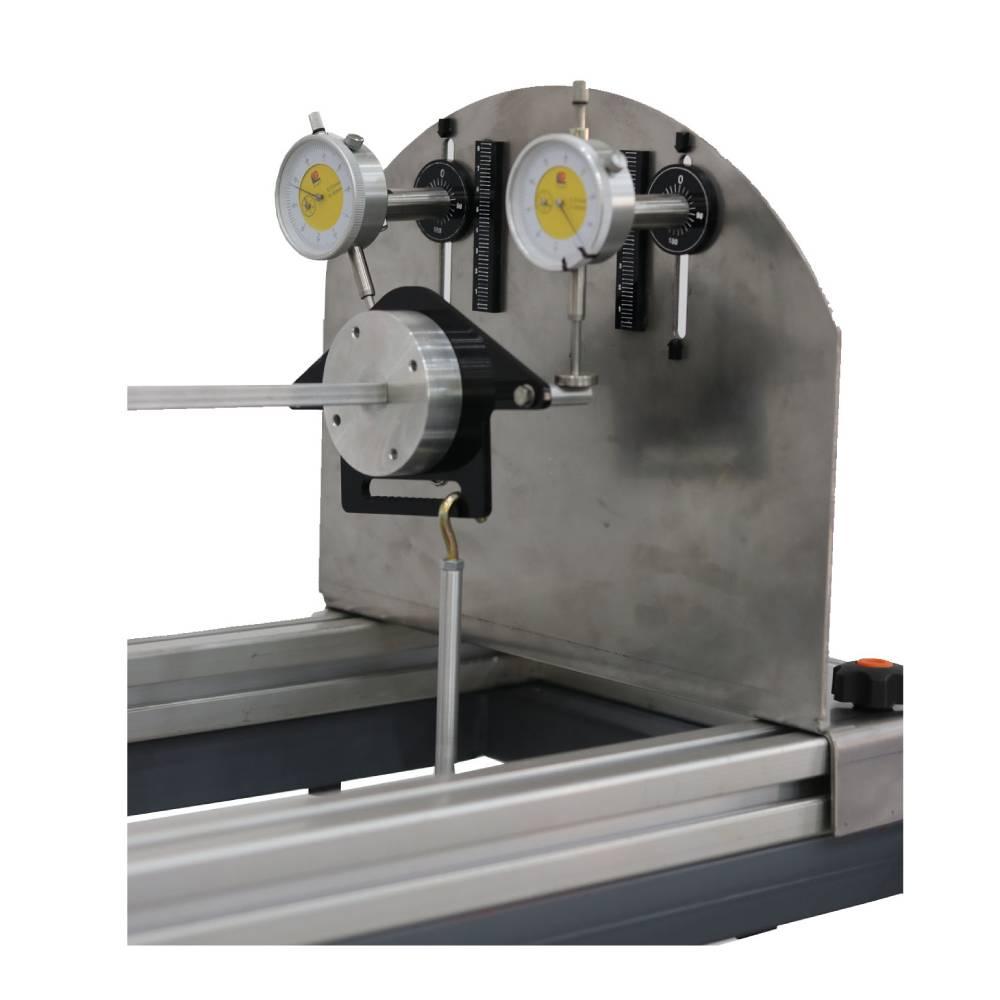
Unsymmetrical Bending Machine
Item Code: RS 038
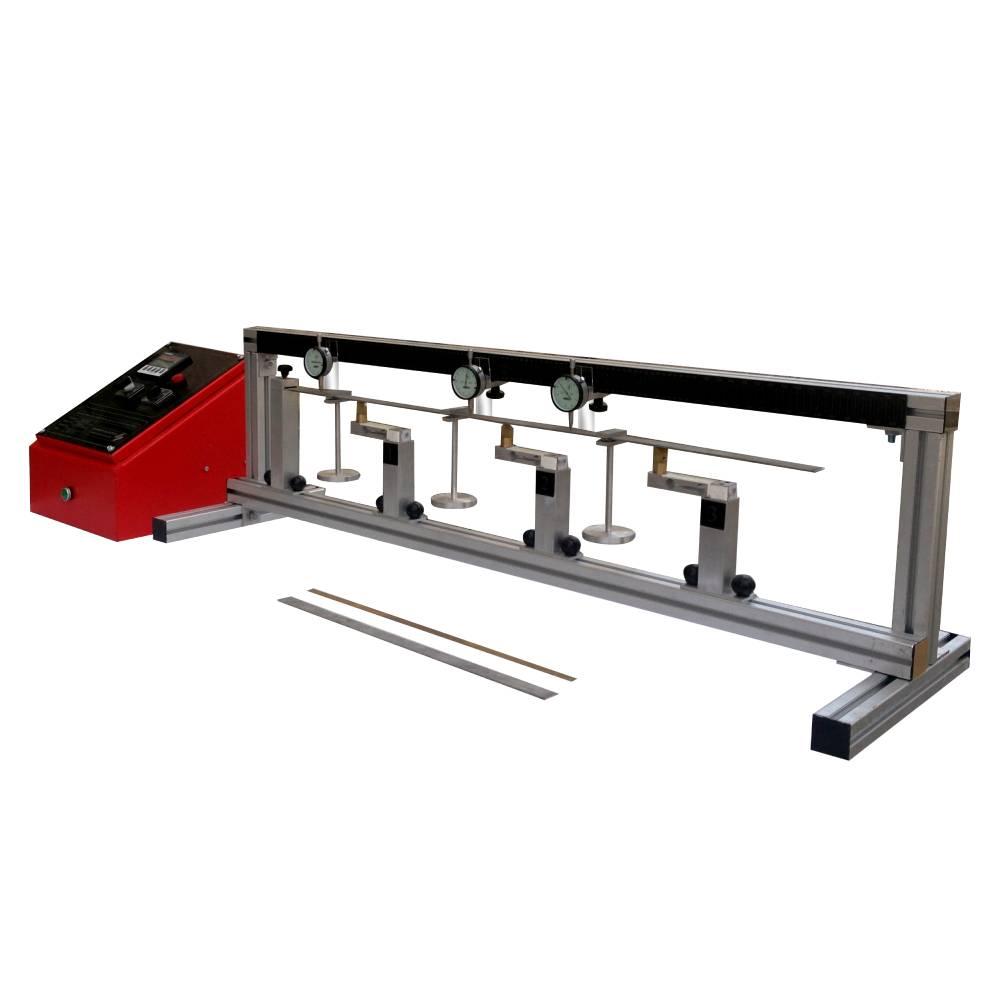
Symmetrical bending of a beam – also known as uniaxial bending – occurs when the load plane coincides with one of the main axes of the beam cross-section. The beam then deflects in the direction of the load and can be described by elastic lines. In unsymmetrical bending of a beam – also known as complex or biaxial bending – the main axes of the cross-section do not coincide with the direction of loading. To prevent torsion, the line of application of the load must pass through the shear centre. If it does not, the beam undergoes combined bending and torsion loading. This Unit is used to perform experiments relating to unsymmetrical bending . The beam under investigation is clamped into place on one end and loaded down at the free end. Two dial gauges record the horizontal and vertical deformation of the beam. If we load a prismatic beam like a downpipe on a plane perpendicular to its longitudinal axis, in addition to bending moment, there will also be torsional moment on the downpipe cross section. However, if the exerted load line coincides with what is called shear center, the beam just bends without experiencing torsion. Using the unsymmetrical bending apparatus, we can investigate unsymmetrical bending relations in beams.